
Part II: How to Fix It
If you have not read Part I, read here
The Diagnostic Toolkit
Five inexpensive tools, used with discipline, cover almost every chiller diagnosis on a flexo press:
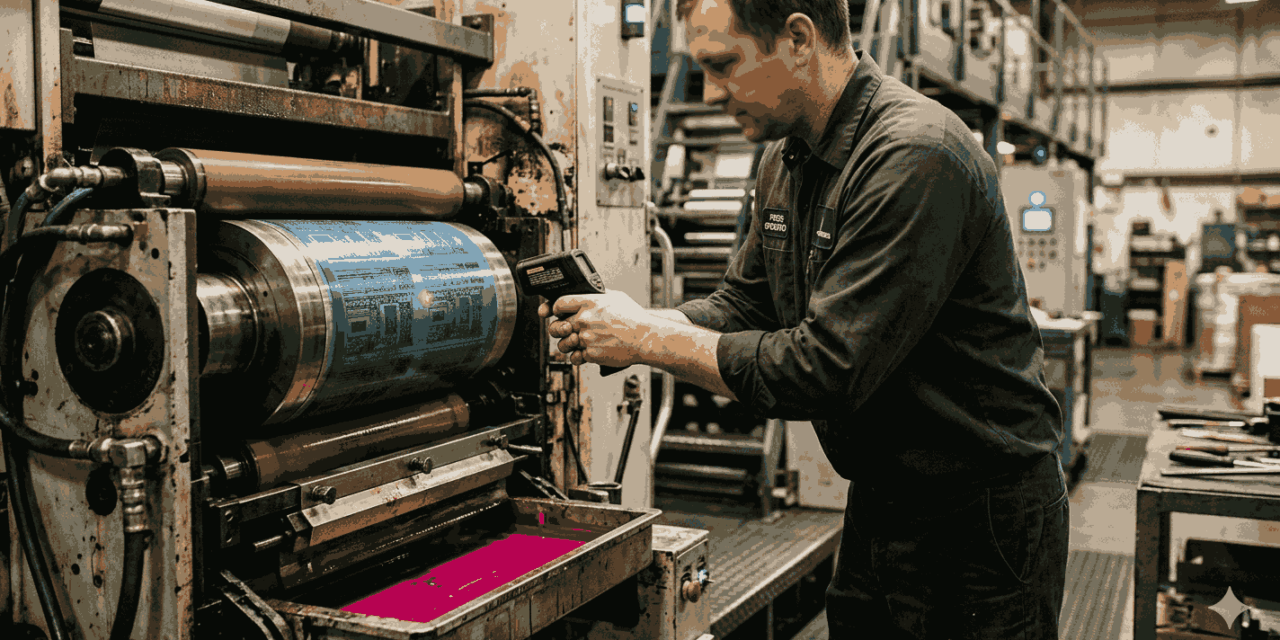
- Infrared thermometer or thermal camera for spot checks on plate cylinders, ink trays, lamp heads, and manifold branches
- Refractometer to check glycol concentration at the supply tank
- Pressure gauge at the supply and return ports of each consumer to confirm flow
- Chiller controller log for supply temperature, return temperature, alarms, and runtime over the shift
- A simple shift log that records ambient temperature, chiller setpoint, and defect onset time per job
The chiller controller already records most of the data you need. The discipline gap is correlating that data with the printed defect, which is why a paper or digital shift log kept next to the press matters as much as any instrument on the chiller cabinet.
Fixes by Time Horizon
When the defect is confirmed as chiller related, the response falls into three timeframes.
Immediate (this shift):
- Adjust the setpoint up or down by 1 to 2°C to test the relationship to the defect
- Clean the condenser coil on an air cooled unit using compressed air or a soft brush
- Bleed air from the high points of the cooling loop
- Top up glycol if the refractometer reads below specification
- Confirm flow rate at each consumer matches the press manifold rating
Medium (this month):
- Sample and lab test the glycol for pH and inhibitor depletion
- Calibrate or replace drifted temperature and flow sensors
- Rebalance the manifold across consumers if one branch is starved
- Insulate exposed supply piping running through warm plant areas
- Schedule a refrigerant circuit service if capacity has dropped beyond seasonal expectation
Strategic (this year):
- Reassess total heat load against current press speeds and substrates
- Add a free cooling economiser if winter ambient allows compressor bypass
- Specify N+1 redundancy on the most critical loop, usually the LED UV head
- Plan a refrigerant change if the unit runs on an F gas heading for phase down
Prevention: A Weekly Quality Loop
The most reliable prevention is integrating chiller health into the same quality routine that already checks anilox volume, plate height, and printed density. Once a week, log:
- Chiller supply and return temperature at full production speed
- Glycol concentration and pH
- Pump pressure at one reference consumer
- Ambient temperature in the chiller room
A four week trend of those four numbers will flag a drifting chiller weeks before it shows up on the printed web. The cost is fifteen minutes a week and a clipboard.
Conclusion
A flexo press is a sensitive thermometer for its own cooling system. Register drift, dot gain shift, LED under cure, ink density swing, plate swell, and VOC alarms all carry a temperature signature, and almost all of them lead back to the chiller before they lead anywhere else. Treat the printed web as the first diagnostic instrument, the chiller controller as the second, and your IR thermometer as the third. Working the problem in that order turns most heat related defects into a fifteen minute fix instead of a half shift mystery.